Horizontal name lockups, where the mark and the system's name are set together. Wider than they are tall — give them a lockup slot rather than an icon box, and do not substitute one for a product mark.
WordmarkWebP
Sagitta Banking wordmark
Horizontal Sagitta Banking name lockup, 660×190. For headers and lockups with room for a wide asset — it is not a square product mark and does not stand in for one at icon scale.
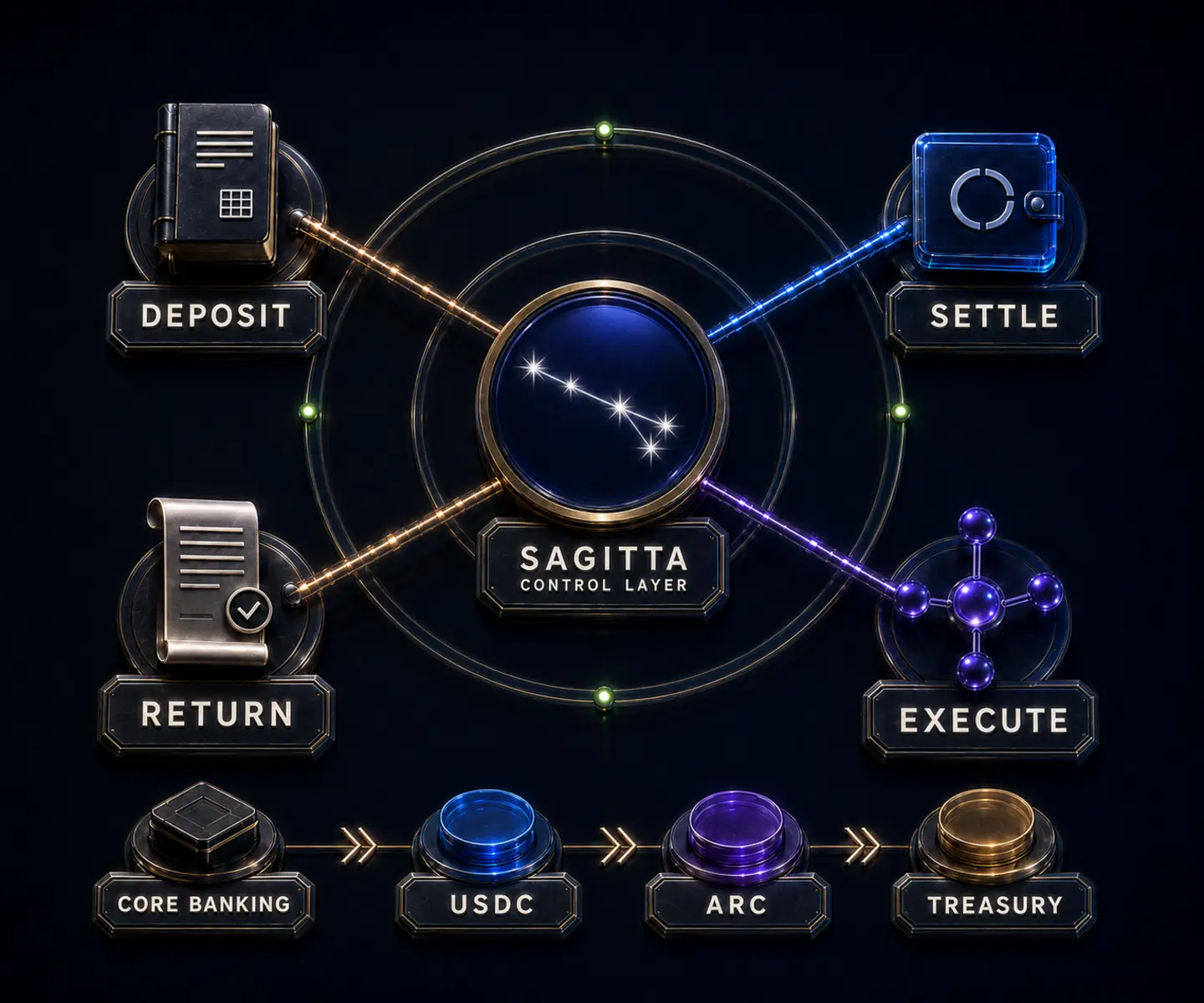
The deposit, settle, execute, and return lifecycle around the Sagitta control layer, with the core banking to USDC to Arc to treasury rail. An architecture brief for a system in development, not a record of a delivered integration.
Product video published by Sagitta, classified by what each recording is. Each opens on the system page that embeds it.
VideoProduct Overview1:55
Sagitta Radar Overview
A product overview of Sagitta Radar and how it monitors DeFi infrastructure, identifies relevant changes, records evidence-backed findings, and delivers intelligence to operator workflows.
Documents, diagrams, and system outputs, each recorded with what it actually proves. An architecture brief is not an implemented result, and a sample output is not a customer's.
Architecture briefDIAGRAM
Sagitta Banking account-to-treasury lifecycle
That the deposit lifecycle — deposit, settle, execute, return — is specified end to end around a single control layer, and that the rail from core banking through USDC and Arc to treasury is designed rather than assumed. It does not evidence a live integration: Sagitta Banking is in development.
The structure and methodology of the Defense Review deliverable — what a review examines and how findings are presented. It is a specimen, not an engagement outcome, and it names no client.
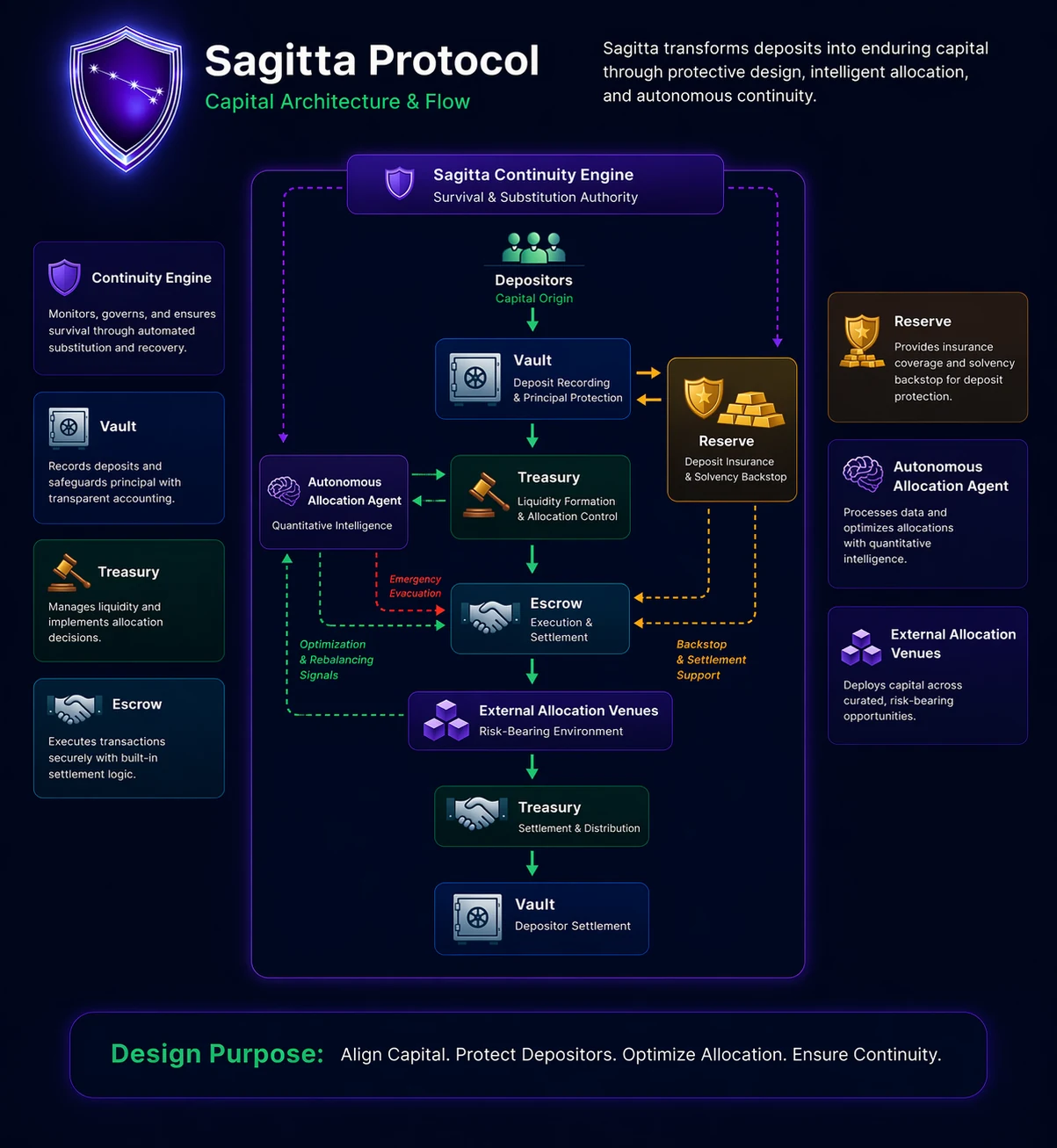
How capital moves through the protocol: deposits into the Vault, liquidity through the Treasury, the gold-backed Reserve, Escrow as the interface to external venues, and AAA and SCE governing allocation and continuity.
The protocol's architecture, doctrine, and capital-flow design as published in full — the Vault, Treasury, Reserve, and Escrow, with the Allocation Agent and the Continuity Engine as components rather than integrations.
Mixed-media records held in the newsroom index. Audio and video are supported by the newsroom's components; nothing has been recorded yet, so nothing is listed.
A Sagitta Defense mini-review tracing CVE-2023-39363 from compiler exposure through technical reachability, economic exploitability, protocol authority, migration, and restoration.
A controlled comparison of two Selun allocations showing how risk tolerance changes policy expression while the recorded market state remains Defensive.
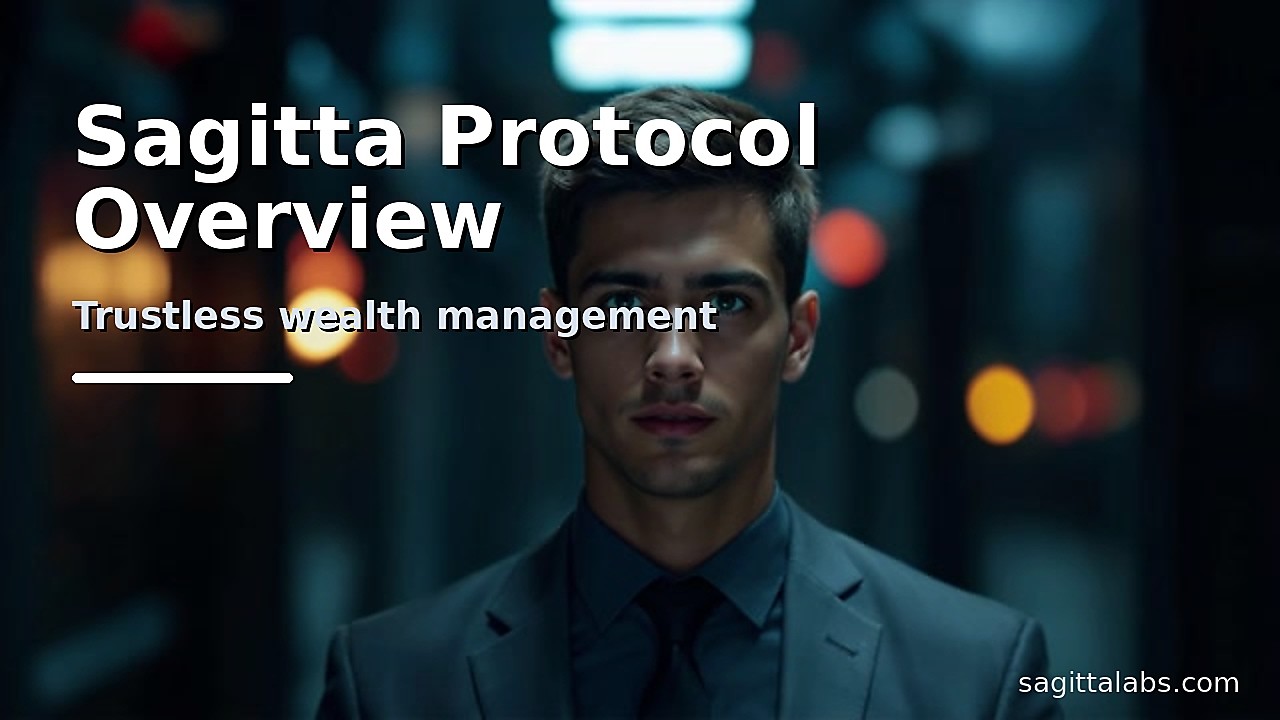
A video overview of the Sagitta Protocol architecture — the Vault, Treasury, Reserve, and Escrow, and the doctrine behind treating capital protection as a system requirement rather than an operator promise.